Community articles — Two-column
Recent
Projeto lab CE2
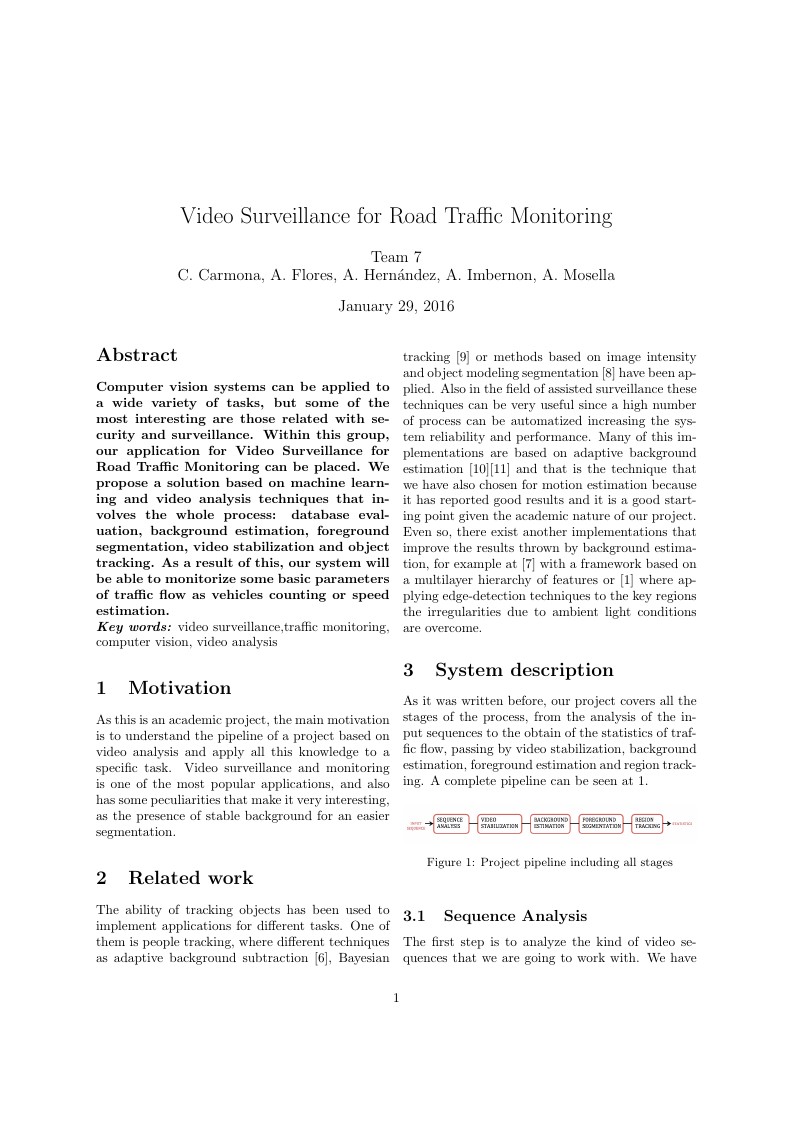
Computer vision systems can be applied to a wide variety of tasks, but some of the most interesting are those related with security and surveillance. Within this group, our application for Video Surveillance for Road Traffic Monitoring can be placed. We propose a solution based on machine learning and video analysis techniques that involves the whole process: database evaluation, background estimation, foreground segmentation, video stabilization and object tracking. As a result of this, our system will be able to monitorize some basic parameters of traffic flow as vehicles counting or speed estimation.

Created using the Deedy CV/Resume XeLaTeX Template Version 1.0 (5/5/2014)
How to conceal objects from electromagnetic radiation has been a hot research topic. Radar is an object detection system that uses Radio waves to determine the range, angle, or velocity. A radar transmit radio waves or microwaves that reflect from any object in their path. A receive radar is typically the same system as transmit radar, receives and processes these reflected wave to determine properties of object. Different organizations are working onto hide object from the radar in outer space. Any confidential object can be taken through space without being detected by the enemies. This calls for necessity of devising new method to conceal an object electromagnetically.

Created using the Deedy - One Page Two Column ResumeLaTeX Template by Debarghya Das, from https://github.com/deedydas/Deedy-Resume. IMPORTANT: THIS TEMPLATE NEEDS TO BE COMPILED WITH XeLaTeX

devoir 1 ere annee niveu lycee
In this document we focus on modifying the Linux Kernel through memory and scheduler parameters. The main objective is to study the performance of a computer during the execution of AIO-Stress Benchmark. It was necessary to run the test several times since three of the parameter mentioned in this project were modified 5 times. After completing the test, the results were displayed on graphs, showing that all the variables have a noticeable influence on the performance of the computer.
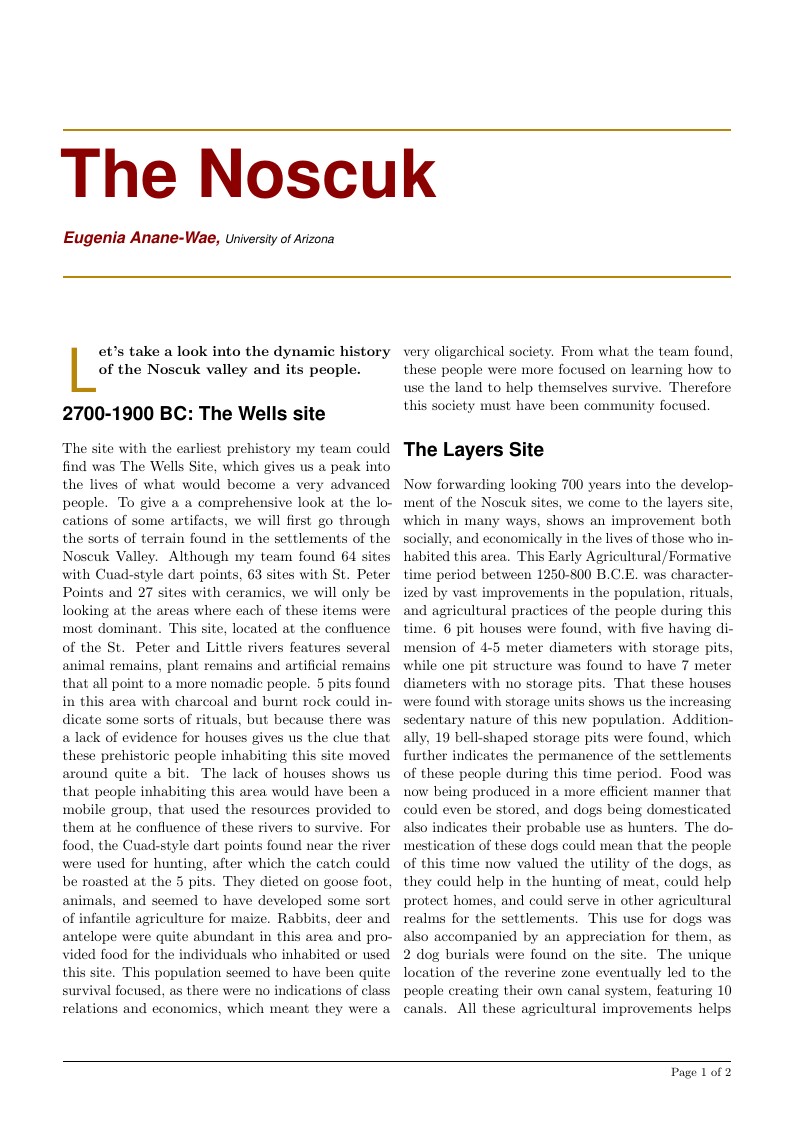
Let's take a look into the dynamic history of the Noscuk valley and its people.
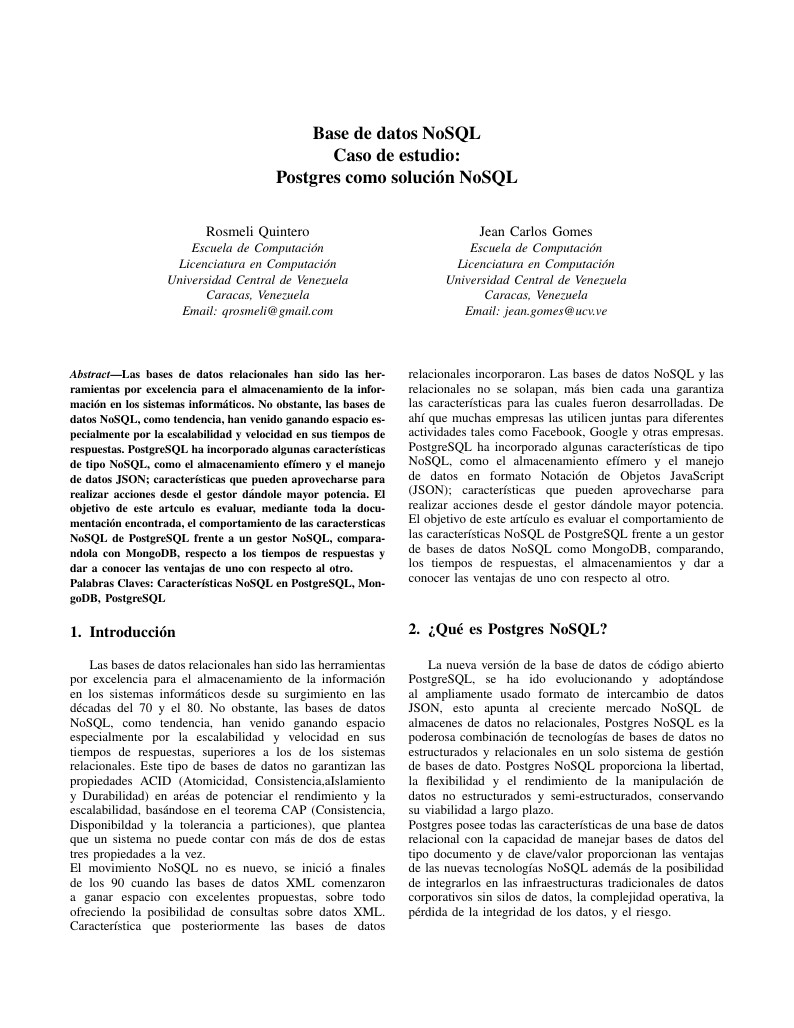
Las bases de datos relacionales han sido las herramientas por excelencia para el almacenamiento de la información en los sistemas informáticos. No obstante, las bases de datos NoSQL, como tendencia, han venido ganando espacio especialmente por la escalabilidad y velocidad en sus tiempos de respuestas. PostgreSQL ha incorporado algunas características de tipo NoSQL, como el almacenamiento efímero y el manejo de datos JSON; características que pueden aprovecharse para realizar acciones desde el gestor dándole mayor potencia. El objetivo de este artículo es evaluar, mediante toda la documentación encontrada, el comportamiento de las características NoSQL de PostgreSQL frente a un gestor NoSQL, comparandola con MongoDB, respecto a los tiempos de respuestas y dar a conocer las ventajas de uno con respecto al otro. Palabras Claves: Características NoSQL en PostgreSQL, MongoDB, PostgreSQL
\begin
Discover why over 30 million people worldwide trust Overleaf with their work.