overleaf template galleryLaTeX templates and examples — Recent
Discover LaTeX templates and examples to help with everything from writing a journal article to using a specific LaTeX package.
Il presente template di tesi è stato sviluppato dal Collaborative Development Group (Collab) del Dipartimento di Informatica dell’Università degli Studi di Bari Aldo Moro (UniBa) al fine di fornire agli studenti uno strumento di supporto nella redazione dell’elaborato finale, in conformità con le linee guida previste dall’Ateneo. Si specifica che il documento non rappresenta un modello ufficiale dell’Università.
This template provides a fully compliant, ready-to-use LaTeX setup for writing a Master’s Thesis (Dissertation, Project, or Internship Report) at Instituto Superior de Engenharia de Lisboa (ISEL).2026-10-09 - Updated colors with RED and Purple in headings according to ISEL rules.Built according to the latest institutional standards set by the Technical-Scientific Council. The project features a modular structure with a dedicated class file (iselthesis.cls) that handles typography, 2.5 cm margins, 1.5 line spacing, and standard chapter hierarchy out of the box. It includes dedicated files for both official cover designs—the full-page orange grid cover (Anexo I) and the detailed title page containing jury members and affiliations (Anexo II)—alongside pre-formatted front matter for the Declaration of Integrity, Portuguese Resumo, English Abstract, and Acronyms list.
![Template slide [ENGL]](https://writelatex.s3.amazonaws.com/published_ver/53066.jpeg?X-Amz-Expires=14400&X-Amz-Date=20261017T063825Z&X-Amz-Algorithm=AWS4-HMAC-SHA256&X-Amz-Credential=AKIAWJBOALPNFPV7PVH5%2F20261017%2Fus-east-1%2Fs3%2Faws4_request&X-Amz-SignedHeaders=host&X-Amz-Signature=e8e5aee2d7e04d1cd0a21b50540da3771429378c1608e8057970d957c3b6b297)
Slider template for the “DataIA Community – The Paris-Saclay AI Talent Network”, from the DataIA Institute. DataIA is the Artificial Intelligence Institute of Université Paris-Saclay and was awarded the AI-Cluster label by the French government in 2024. This template is designed to support students and researchers from the DataIA ecosystem by providing them with a ready-to-use slider template in English. You can find the official guideline here
Scientific poster template for the “DataIA Community – The Paris-Saclay AI Talent Network”, from the DataIA Institute. DataIA is the Artificial Intelligence Institute of Université Paris-Saclay and was awarded the AI-Cluster label by the French government in 2024. This template is designed to support students and researchers from the DataIA ecosystem by providing them with a ready-to-use scientific poster template. You can find the official guideline (still in development) here
Scientific poster template for the “DataIA Community – The Paris-Saclay AI Talent Network”, from the DataIA Institute. DataIA is the Artificial Intelligence Institute of Université Paris-Saclay and was awarded the AI-Cluster label by the French government in 2024. This template is designed to support students and researchers from the DataIA ecosystem by providing them with a ready-to-use scientific poster template. You can find the official guideline (still in development) here
![Slider template DataIA [FR]](https://writelatex.s3.amazonaws.com/published_ver/53067.jpeg?X-Amz-Expires=14400&X-Amz-Date=20261017T063825Z&X-Amz-Algorithm=AWS4-HMAC-SHA256&X-Amz-Credential=AKIAWJBOALPNFPV7PVH5%2F20261017%2Fus-east-1%2Fs3%2Faws4_request&X-Amz-SignedHeaders=host&X-Amz-Signature=d58232d58bf726bc1405fe6fa3a0d55667b98131837b46b778c106528940b5e7)
Slider template for the “DataIA Community – The Paris-Saclay AI Talent Network”, from the DataIA Institute. DataIA is the Artificial Intelligence Institute of Université Paris-Saclay and was awarded the AI-Cluster label by the French government in 2024. This template is designed to support students and researchers from the DataIA ecosystem by providing them with a ready-to-use presentation template in French. You can find the official guideline here
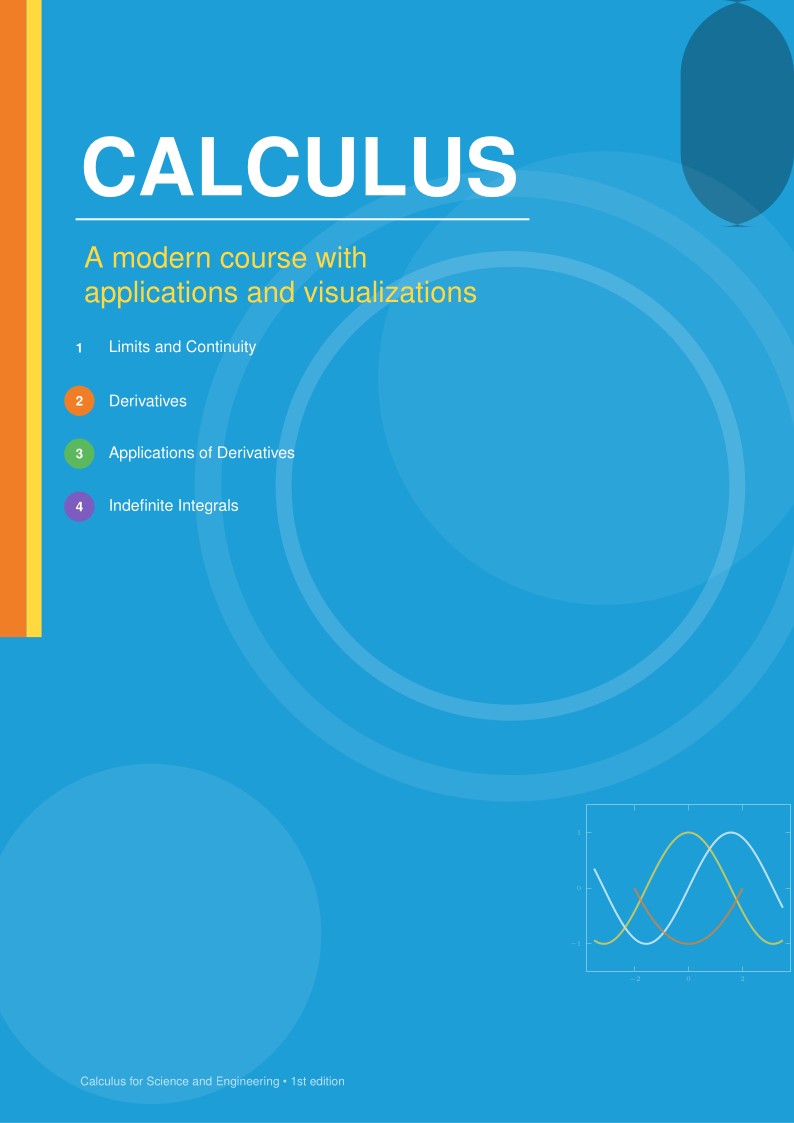
A complete LaTeX template for creating polished calculus textbooks and course notes. It includes a modern TikZ cover, color-coded chapters, custom theorem and exercise environments, pgfplots visualizations, worked examples, exercises, and answer keys. English edition. Project source: https://github.com/texdrop/BookCalculus
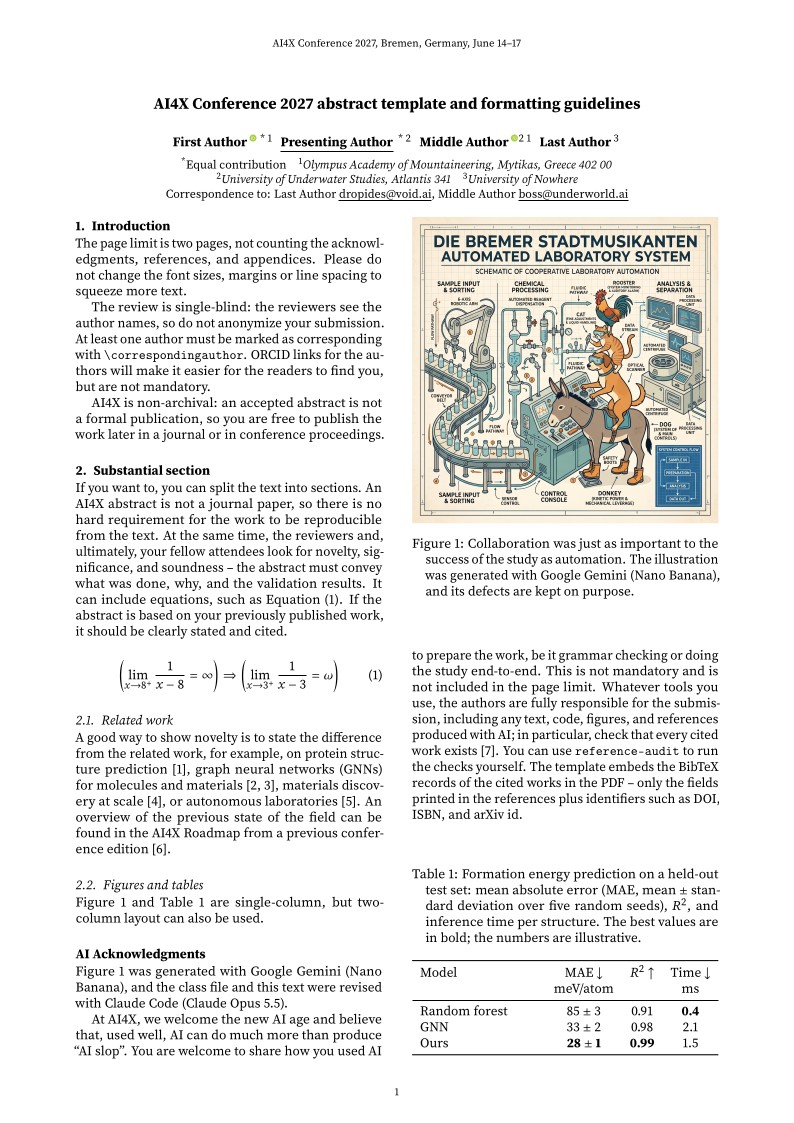
Template for the AI4X 2027 conference, https://ai4x.cc/
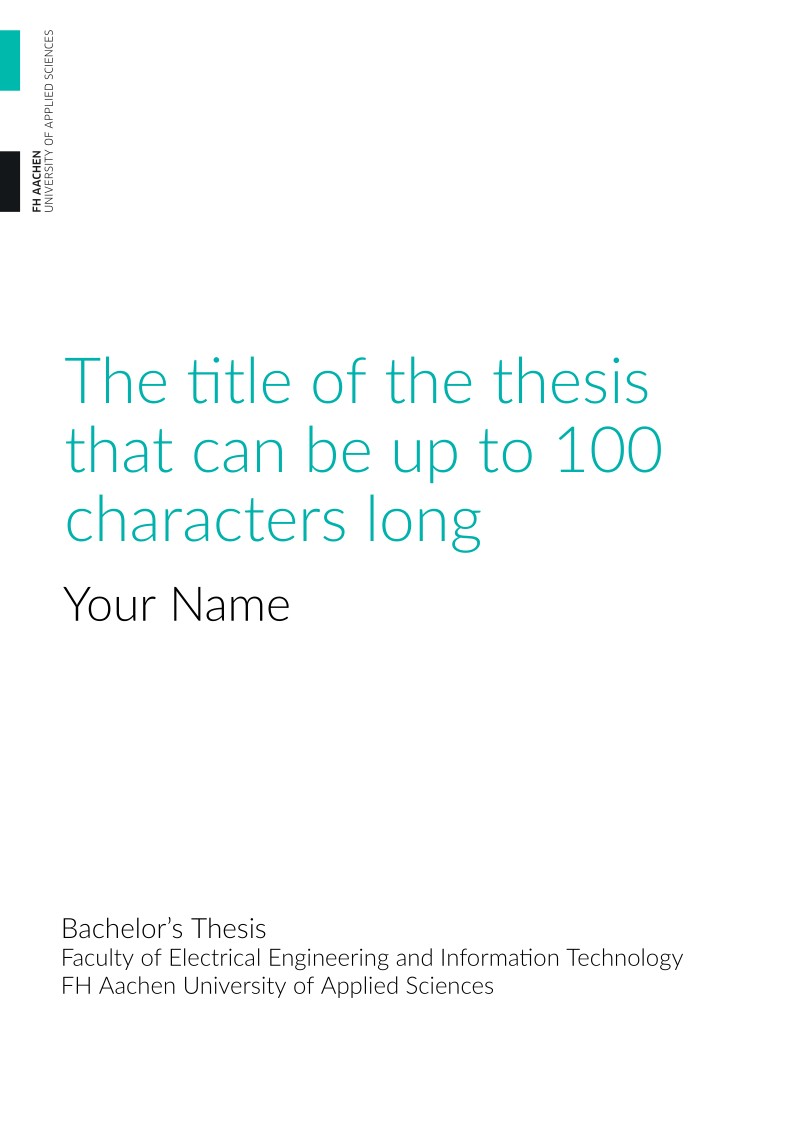
A Thesis template as used in the AppLab at FH Aachen University of Applied Sciences. See https://git.fh-aachen.de/applab/thesistemplate
\begin
Discover why over 30 million people worldwide trust Overleaf with their work.